
2011 NAVY UCAS Integrated Test Team
NAVY UCAS INTEGRATED TEST TEAM
Nomination for the 2011
SFTE “James S. McDonnell” Award
Navy Unmanned Combat Air System Carrier Demonstration Program Overview
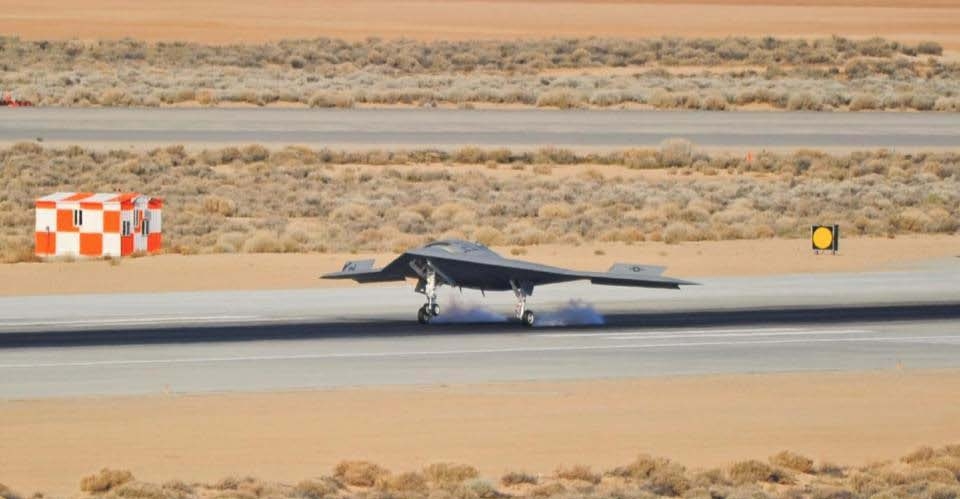
The Navy UCAS Carrier Demonstration program is designed to demonstrate the operation of a tailless, low-observable, autonomous group 5 UAS to and from the deck of an aircraft carrier (CV), including launch, recovery, bolter, and autonomous aerial refueling. The purpose of the program is to mature technologies for follow-on UAS acquisition programs; to develop the shipboard components of the system; to develop CONOPS for shipboard UAS test and operation; and to develop infrastructure to support future development and testing of future CV compatible UAS’s. Critical technologies being matured include autonomous CV/tanker airspace operations; air vehicle guidance, navigation and control; flush air data systems; tailless vehicle aerodynamics/control; low latency safety of flight command and control (C2); precision navigation in a Carrier Control Approach (CCA) environment; and deck handling / deck operation.
Components of the system include the air vehicle, the X-47B; the support segment, comprised of the equipment required to maintain and taxi the vehicle ashore and on the flight deck; the control segment, comprised of the mission planning and mission control elements; the CV segment, which is comprised of the shipboard components and interfaces required to control the aircraft on and around the aircraft carrier; and the Autonomous Aerial Refueling (AAR) segment that is comprised of the components and interfaces required to control the aircraft behind an airborne tanker. The Northrop Grumman Corporation (NGC) is responsible for developing the X-47B, the support segment, and the control segment, while NAVAIR is responsible for developing the CV and the tanker segments.
In parallel to X-47B testing, the test team is conducting the Aviation/Ship Integration (A/SI) and AAR system tests with surrogate aircraft modified to incorporate N-UCAS A/SI components that allow the aircraft to interact with and be controlled by the CV or the tanker during portions of the flight. Aircraft modified with the A/SI components for CV testing include a King Air 200 and an F/A-18 Hornet. Shore-based testing of these components is being accomplished using the N-UCAS Air/Ship Integration Facility (NASIF) located at NAS Patuxent River, MD. The NASIF provides a representative installation of the CV segment using runway 32 as the landing area. AAR surrogate testing is supported by a modified Lear Jet 25B and a modified K-707 tanker. The Lear Jet was modified with A/SI components, as well as with a Vision system that is designed to support autonomous refueling to drogue-equipped tankers. The K-707 was modified with portions of the N-UCAS AAR segment.
Test Team Personnel
The test team was composed of NAVAIR, USAF, NGC, and NAVAIR Contract Support Services engineers and technicians, and Navy and NGC mission operators, test pilots, and test aircrew. Team members provided expertise in areas such as Flying Qualities, Performance, Loads and Dynamics, Propulsion, Utility Systems, Carrier Suitability, and Air Traffic Control and Landing Systems. An experienced group of test operations engineers and technicians provided the test conductor and aircraft instrumentation expertise.
Accomplishments
Approximately 42 flight and numerous ground tests were completed with the following results:
- Demonstrated X-47B low and medium speed taxi performance during 20 separate tests, identifying ground handling anomalies for subsequent correction.
- Demonstrated high speed taxi of the X-47B, uncovering unexpected ground tracking performance. The test team actively pursued the root cause, and developed a low-risk procedural approach to demonstrate tracking performance without a major system redesign, allowing testing to continue towards first flight months earlier than otherwise would have been possible.
- Demonstrated a flawless first flight of the X-47B at Edwards AFB, accomplished all planned objectives, and landed autonomously on runway centerline. As a tribute to the teams careful planning, no significant changes to test planning, procedures, or vehicle hardware and software were required for following flights.
- Continued envelope expansion, flying the 2nd and 3rd X-47B flights within four days of each other, collecting 28 planned data points with near 100% test efficiency.
- Demonstrated CV integration and control of the A/SI components with the modified King Air 200 and F/A-18 and the NASIF. Testing including Carrier Controlled Approach (CCA) operations, and standard CV approach profiles.
- Demonstrated A/SI system interface with the modified King Air 200 and the USS ABRAHAM LINCOLN (CVN-72) over 11 flights in February of 2010.
- Collected flight test data to support autonomous aerial refueling over 5 flights and 20 hours using the modified Lear Jet 25B and the modified K-707 tanker.
- Demonstrated A/SI system performance with autonomous (coupled) approaches to touchdown on Runway 32 at NAS Patuxent River with the modified F/A-18, flying all standard CV approach profiles.
- Demonstrated CV integration and control with the USS DWIGHT D. EISENHOWER (CVN-69) utilizing both the modified King Air 200 and the F/A- 18. Completed CCA pattern work and approaches to an elevated touchdown point as a build-up to coupled approaches to the flight deck.
Summary of Tests
First X-47B Test Flight: 4 February 2011
Total X-47B Flights as of 21 June 2011: 3
First N-UCAS Surrogate Test Flight: September 2009
First N-UCAS CV Test Period (CVN-72): February 2010
First N-UCAS Surrogate Coupled Autonomous Landing (Shore): 21 April 2011
First N-UCAS Surrogate Coupled Autonomous Case I Landing (Shore): 2 June 2011
Second N-UCAS CV Test Period (CVN-69): June 2011
Total N-UCAS Surrogate Test Flights as of 21 June 2011: 39
Test Team Contributions
The N-UCAS ITT has achieved several significant “firsts” in the past 18 months, efficiently performing test on 5 type/model series aircraft at multiple locations, including NAS Patuxent River, MD, Edwards AFB, CA, CVN-69 and CVN-72. Significant contributions in addition to the accomplishments listed above include:
- Developed detailed operating procedures to ensure ground test, system checkout, and maintenance troubleshooting guidance supported testing of a large, autonomous UAV.
- Developed over 800 pages of test plans that incorporated both lessons learned from other UAS test programs and unique CONOPS specific to the X-47B and the ship segment.
- Improved UAS procedures for system checkouts, ground and flight standard procedures, and software certification processes after uncovered a significant software anomaly which caused an incident during a normal post-taxi engine shutdown. Test team personnel were key members of the Root Cause and Corrective Action (RCCA) board and process after the incident.
- Identified C2 link vulnerability prior to first flight of the X-47B, which led to changes in C2 configurations and resulting in no C2 dropouts during any of the three flights.
- Uncovered several system anomalies during surrogate testing aboard the King Air and F/A-18, resulting in multiple improvements to the shipboard segment and aircraft control architecture
- The dedicated team worked nights and weekends to meet schedule constraints and support system development. When a software anomaly threatened to reduce the amount of usable data available from the most recent CV test period, the team siezed a small window of opportunity to fly ashore to satisfy required build-up test points, working through barriers including a lightning-damaged runway to accomplish the tests on a Saturday morning, in time to support the next CV test period.
- Briefed lessons learned at SETP and at the Flight Test Safety Workshop.
Other Considerations
These tests were truly unique in that the team was formulating new test strategies to evaluate the capability for an autonomous air vehicle to operate in the very challenging and unforgiving shipboard environment. The use of surrogate aircraft and shore based replications of the key shipboard interfaces (e.g. LSO Platform, Primary Flight Control, Carrier Air Traffic Control Center) to demonstrate both the airborne component of the system and the shipboard component resulted in considerable cost and schedule savings. Synching the aforementioned tests with the parallel efforts on the X-47B air vehicle was also unique and challenging. The test team also overcame geographical test site and test team location challenges to ensure success. The culmination of these tests will be a demonstration of X-47B launch, recovery, and deck maneuvering operations aboard a CV in 2013.
Reflecting the team's accomplishments, the team was honored by being selected as the Test Team of the Quarter for the first quarter 2011 by the 412th Operations Group, by the 412th Test Wing, and finally by the Air Force Flight Test Center.