2007 EA-18G 'Growler' Flight Test Team
EA-18G “GROWLER” FLIGHT TEST TEAM
Nomination for the 2007
SFTE "James S. McDonnell" Award
EA-18G Overview
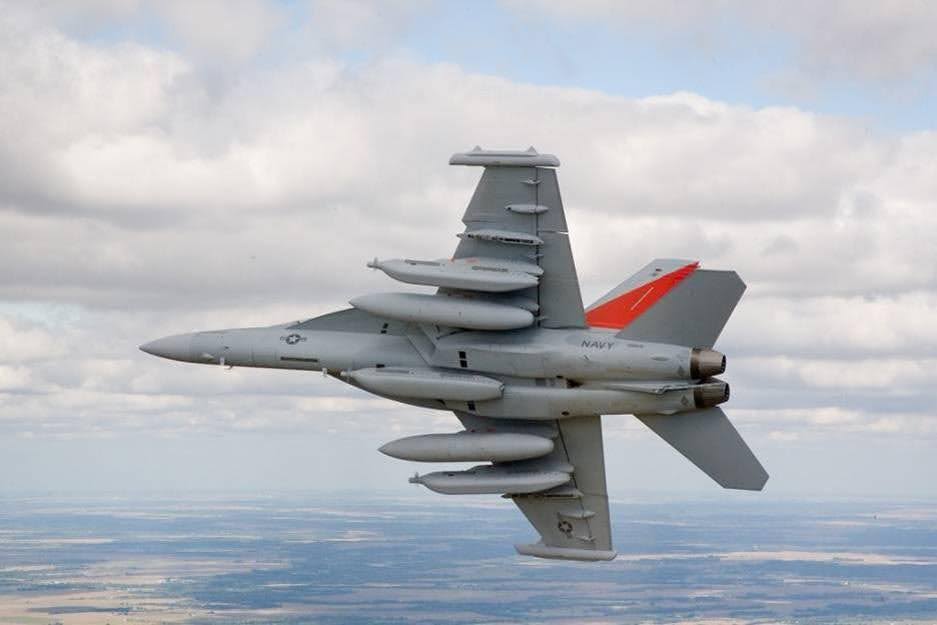
The EA-18G “Growler” is a major military acquisition program with the objective of replacing the aging EA-6B Prowler aircraft. The program was initiated in December 2003 as a rapid development, medium-risk acquisition program with the critical requirement to provide initial operational capability for an airborne electronic attack aircraft in September 2009. The Chief of Naval Operations directed program requirements, design and manufacturing lead times, as well as critical acquisition milestones led to an extremely aggressive flight test program with multiple mission software and hardware builds. The EA-18G flight test program is being executed in two separate testing phases, aeromechanical and mission systems. Aeromechanical testing to clear the complete aircraft envelope was conducted using four modified, instrumented F/A-18E/F aircraft.
Mission Systems testing was completed using two highly modified, instrumented EA-18G aircraft with full mission systems avionics installed. The EA-18G test team is a “virtual” integrated test team led by the government and consisting of members from eight organizations at six separate government and contractor sites (Boeing St. Louis, Northrop Grumman Bethpage, Northrop Grumman(ES) Baltimore, VX-23 NAS Patuxent River, VX-31, VX-9, Advanced Weapons Lab NAWC-WD China Lake, VX-30 NAS Pt Mugu). The EA-18G contractor team was led by Boeing Tactical Aircraft Systems with Northrop Grumman as a principal contractor. EA-18G system design and development flight testing began in July 2005 and will continue until September 2008.
The exceptional dedication of the entire test team resulted in near-perfect execution during the first six months of mission system testing. During a time in the program where there was no schedule slack, the team exceeded expectations and completed all program goals eight weeks ahead of schedule - this is a virtually unheard of accomplishment in a major defense acquisition programs and was a direct result of the innovative and talented flight test team.
Accomplishments (from 30 April 06 – 30 April 07)
Due to the significant number of external moldline and store loading changes on the aircraft, the NAWC-AD test team was tasked with completing a 350 flight aeromechanical test program to clear the aircraft in all flight test disciplines including flutter, flying qualities, carrier suitability, noise and vibration, performance, loads, and weapon separation. The EA-18G program initiated its formal flight test program with the first flight of the ALQ-218 wingtip pods on 30 April 2006. Since that date the test team has completed a total of 291 test flights, collected over 400 hours of flight test data, and completed over 1,850 test points. Each test flight required a full test team and complement of range flight test engineers to monitor safety of flight and test critical telemetry data. Collection and analysis of data allowed the flight clearance envelope expansion necessary for the mission systems aircraft testing and for future operational EA-18G aircraft. The test team has effectively accomplished all program goals despite numerous technical challenges and the overall difficulty of managing a highly integrated, multiple-aircraft flight test schedule.
Following a 16 month aircraft modification period, the test team successfully completed first article acceptance testing of EA-18G Airborne Electronic Attack (AEA) hardware and instrumentation systems. The team conducted an extremely successful first flight readiness review in June 2006 followed by EA-1 first-flight on 15 August 2006, which was executed one month earlier than planned. Following initial acceptance testing, the team rapidly and flawlessly transitioned the aircraft and an entire test team from Boeing (St Louis, MO) to NAS Patuxent River, MD. Due to thorough onsite planning the first aircraft test flight was successfully flown only eleven days following delivery to Patuxent River and the team successfully exercised all aircraft and instrumentation systems on the range. Successful demonstration of WorkStation 2000 instrumentation displays, high bandwidth telemetry streams, and transmission of system bus data on the first range flight was a tribute to the professionalism and expertise of the entire test team. Concurrent with completion of EA-1 initial testing, the team delivered the 2nd highly modified and instrumented EA-18G aircraft (EA-2) to the test site on schedule in December 2006.
Aircraft system maturity and team readiness enabled the flight test team to commence the DT/OT-B1 testing phase with the first developmental test flight only 48 hours after aircraft delivery to the test site. In order to meet extremely aggressive mission system test goals for the first 90 days, the test team successfully executed a combination of developmental flight test, operational flight test, and concurrent chamber testing on two separate aircraft. During the initial weeks of the flight test program, the national integrated test team was able to support an average of four test flights per week and multiple shifts in the chamber. In order to most effectively support a major program acquisition milestone, ALQ-99 pods were radiated in the chamber eight weeks earlier that planned, and ultimately the team was able to demonstrate airborne jamming in the last week of January, 2007.
From December 2006 to April 2007 aircraft EA-2 flew 55 flights and 116.8 hours in support of mission systems testing and completed its first test detachment to NAWC-WD China Lake, CA. This testing included developmental and operational testing of the Growler’s electronic attack capabilities against airborne and surface threats. Again, the solid infrastructure support and team planning enabled the team to support a 2,500 mile cross country ferry flight, then fly the first fully instrumented, developmental test flight on the electronic warfare range the next day. During 34 fly days in China Lake, aircraft EA-2 flew 25 flights for 51.7 flight hours completing rigorous system performance testing on the high fidelity electronic warfare ranges at China Lake and the Nellis Test and Training Range and concluding an Operational Assessment period supporting a successful Milestone C LRIP decision. During that time aircraft EA-1 supported 1,150 hours of mission systems testing in the chamber. The exceptional teamwork and tenacity of the test team resulted in numerous system capabilities being achieved and demonstrated that were not planned for until future phases. There is no question that the forward-leaning performance of the flight test team ultimately saved the program both schedule and cost.
Program Firsts:
30 Apr 2006 - First F/A-18 flight with ALQ-218 pods.
May 2006 - First F/A-18 flight with external ALQ-99 jamming pods.
15 Aug 2006 - First flight of EA-18G aircraft (EA-1)
23 Dec 2006 - First operation of ALQ-99 jamming pods in the chamber.
24 Jan 2007 – First airborne jamming with ALQ-99 pods on the EA-18G.
16 Feb 2007 – First EA-18G flight on Echo Range.